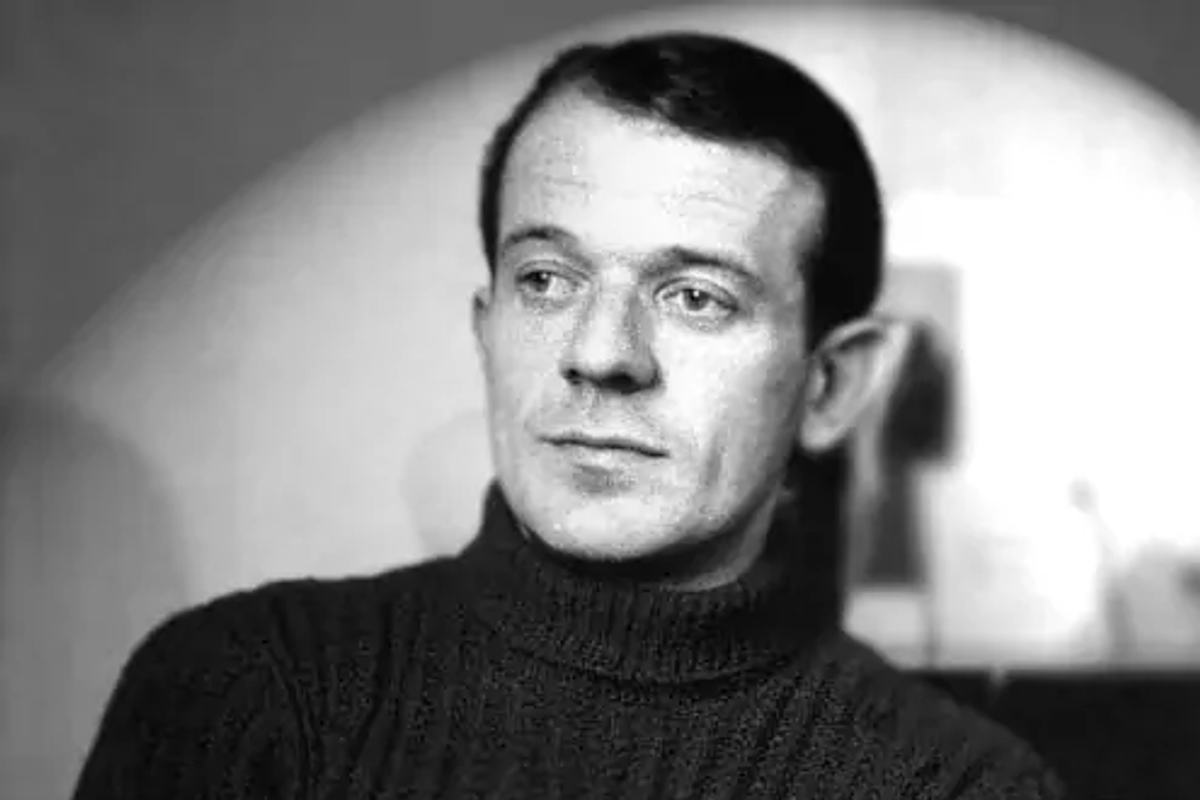
Deleuze is the founding father behind a lot of post-modernist thought, whose work spread extremely wide within the philosophical and academic community. I found out about him in my dorm room in Guildford, a room so small the damp clung to the window frame and the bass from the neighbour’s speakers bled through the wall like a second heartbeat, my laptop propped on a pile of textbooks, the screen alive with the spiralling feedback of the Ueda attractor, and through the tinny headphones the voices of Acid Horizon unfolded a map of the self as a territory without a centre, a rhizome, a body without organs, and I understood that the chaos I was generating with equations was not noise but a method, a way to dismantle the rigid organisation that trauma had inscribed into my nervous system, a nervous system that, as Porges would later articulate in his Polyvagal Theory, had been locked into a state of sympathetic overdrive and dorsal vagal shutdown, a binary that my whole body knew long before I had the words for it, the heart pounding in my chest like a wild animal in a cage while my gut lay paralysed, the two states Deleuze would call the striated and the smooth, and what I was attempting in that room was nothing less than a deterritorialisation of my own autonomic profile, a flight from the striated space of the clinic and the diagnosis and the fixed identity of the traumatised subject into the smooth space of a sonic continuum where I could recompose myself as a body without organs, a body that was not a collection of malfunctioning parts but a surface of intensities, a fluid rhythm, a becoming that had no destination because the destination was the very thing that had imprisoned me in the first place[1][2].
The Body without Organs
The BwO is a practice, a limit-experiment in which you subtract the organising grid of the organism, the face, the subject, the social machine, and you arrive at a field of immanence where desire flows without being channelled into the Oedipal triangle or the capitalist demand, and in that dorm room I built my BwO with the materials at hand: the Ueda attractor on the screen, a pair of headphones, a tab of acid, the forgotten textbooks on music therapy, and the research paper I had printed out, Breit and Kupferberg and Rogler and Hasler on the vagus nerve as the modulator of the brain–gut axis, a paper that confirmed for me that the vagus nerve was the physiological correlate of Deleuze’s plane of consistency, the anatomical cable that translated the unformed matter of the body into the coded messages of the brain and vice versa, the nerve that, when stimulated, released acetylcholine to inhibit the cytokine storm of inflammation, the same inflammation that Felger and Lotrich had linked to the neural circuits of depression, the same depression that had followed me from London to Köln and now to this damp room on the edge of the Surrey hills, and if the vagus nerve could be stimulated by an electrode, I reasoned, it could be stimulated by a sound, by a binaural beat whose carrier frequencies were modulated by a chaotic attractor, a beat that would never settle into a predictable rhythm, that would keep the nervous system on its toes, that would entrain the heart rate variability into a fractal, healthy pattern, the pattern Goldberger had found in the interbeat intervals of a healthy heart and which was absent in the monotonous, metronomic rhythm of the sick, the pattern that was nothing less than the sign of a body that had not yet been fully striated by stress[3][4].
The Great Gatsby
The rhizome, Deleuze and Guattari’s other great gift, is a structure without a taproot, without a central trunk from which all branches derive, a subterranean stem that spreads horizontally, that can be broken at any point and reconnect along a new line, and my life in Guildford was exactly that, a network of nodes with no origin, the Ueda attractor on the screen, the paper on Lactobacillus rhamnosus that showed the probiotic reducing anxiety in mice only when the vagus nerve was intact, the memory of my ex, the knowledge that 95% of the body’s serotonin is produced in the gut by enterochromaffin cells, the hours of splicing audio in FL Studio, the acid trips that dissolved the boundary between my body and the sound, all of it connected laterally, a mycelial web of research and self-experimentation, and I understood that I was proliferating connections, multiplying entryways and exits, becoming a multiplicity that could not be reduced to a single diagnosis or a single identity, because a rhizome has no single identity, it is only ever its connections, and my connections were multiplying with every new paper I read, every new variable I fed into the chaotic equation, every moment of silence after the sound faded and I felt my heart rate slow, my breathing deepen, the vagus nerve finally, briefly, doing its job[5].
Further into plateaus, can we go deeper down Jacob’s Ladder?
There is a passage in A Thousand Plateaus where Deleuze and Guattari write about the refrain, the ritornello, the territorialising song that a child hums in the dark to carve out a little home in the chaos of the world, and I realised that my chaotic binaural synthesis was precisely that, a refrain, a sonic territory I was building to keep the forces of the outside at bay, to mark out a smooth space in the middle of the striated grid of the university timetable, the assignment deadlines, the expectations of my lecturers and my parents and everyone who had ever told me I was too mature for my age or that I didn’t act black, a refrain that could not be captured by the repetitive, industrial rhythms of the working day - a refrain that was constantly deterritorialising itself, mutating, escaping the gravitational pull of habit, and this was the paradox of healing I stumbled upon: to heal is to become capable of new refrains, to increase one’s repertoire of home-making, to turn the trauma into a material for music rather than a cage, and this is what I heard in the Ueda attractor, a shape that never returned to the same point twice yet remained bound within a finite region, a shape that was the visual analogue of a healthy vagal tone, a variability that held a coherence, a style, a signature[6].
The face, for Deleuze and Guattari, is a political system, a white wall with black holes, the machinery that overcodes the head and turns it into a recognisable subject, a black face, a white face, a face that carries the signifiers of race and gender and class and sanity, and I had been trying to escape my face my whole life, the face that was too black to be white and too white to be black, the face that was too mature for a teenager and too broken for a clinician, the face that I would stare at in the mirror on acid and watch it dissolve into a landscape, a topology of pores and shadows, a cartography of the skin that belonged to no one, and in that dissolution I found the BwO, the body that had dismantled its face, and when I closed my eyes and let the chaotic binaural beats wash over me, I entered a space where there were no faces, only vibrations, intensities, the hum of the universe filtered through a pair of headphones, and I became, for those hours, a body without organs, a body that was nothing but the resonance of a vagus nerve finally, fully, alive[7].
The Acid Horizon podcast, with its discussions of Deleuze and Mark Fisher and Michael Foucault, gave me the language to describe what I was doing, but the doing itself was older than language, it was the bodily intuition that sound can reorganise matter, that vibration is the substrate of all biological regulation, that the ear is a portal to the autonomic nervous system, the auricular branch of the vagus nerve running just beneath the skin of the concha, a branch that can be stimulated by sound at certain frequencies, a fact that the paper by Breit et al. gestured toward when it reviewed transcutaneous VNS, and I thought, if a small electrical current applied to the ear can treat refractory depression and PTSD, then a carefully constructed soundwave, a binaural beat that creates a phantom frequency in the brainstem, a frequency that follows the fractal trajectory of a strange attractor, could do the same without the electrodes, without the surgery, without the clinic, without the face of the doctor looking down at you, just you, your headphones, and the dark, humming room[8].
Losing our reality
Deterritorialisation, that central Deleuzian concept, is the process of undoing a territory, of leaving the familiar ground, of becoming a nomad, and I had been deterritorialising myself from the moment I left London, left my ex, left the identity that had been assigned to me, but deterritorialisation is dangerous if it is not accompanied by reterritorialisation, you cannot just strip everything away, you must build new territories, new refrains, and my thesis, my major in music production with a minor in music therapy, was that chaotic sound synthesis could be a reterritorialisation machine, a portable territory that a traumatised person could carry in their pocket, a digital ritual that would recalibrate the vagus nerve, restore the balance between the sympathetic and parasympathetic branches, lower the cortisol that had been flooding my bloodstream for years, and I was not the only one thinking this, there was a whole field of research into the fractal dynamics of physiological health, into the non-linear regulation of the heart, the brain, the immune system, the work of Ary Goldberger and his colleagues on the loss of complexity with aging and disease, the work of Stephen Porges on the polyvagal hierarchy, the work of the vagus nerve researchers who had shown that stimulation of the nerve increases serotonin and norepinephrine in the brain, the very neurotransmitters targeted by the antidepressants I had refused to take because they turned me into a zombie, because they striated my desire, because they made me a good subject but a terrible living being[9][10].
There is a particular episode of Acid Horizon, the one on Deleuze and music, where they talk about the synthesizer as a Deleuzian instrument, a machine that generates a sonic matter from first principles, oscillators, filters, envelopes, a matter that is then sculpted into a territory, and my Ableton sessions were exactly that, a deterritorialisation of the classical music therapy paradigm, which relied on pre-composed, structured pieces, Mozart and Pachelbel and the same tired playlists, a striated music that assumed the patient was a passive receiver, while my chaotic synthesis was a plane of consistency on which I was both composer and listener, therapist and patient, a feedback loop in which the sound I made altered my nervous system and my altered nervous system altered the sound I made next, a becoming-music of the body, a becoming-body of the music, a continuous variation that Deleuze, drawing on the stoics, would call an event, an incorporeal transformation that unfolded across the whole duration of the piece, unabled to be pinned to a specific moment; it was only here in which I found this was the healing - rather than the restoration of a lost equilibrium, it was the production of a new capacity to affect and be affected, an increase in the power to act, what Spinoza, Deleuze’s great teacher, had called joy[11][12].
So I sat there in Guildford, the Ueda attractor tracing its non-repeating orbit on the screen, the binaural beat generator oscillating at a carrier frequency of 200 Hz with a difference of 10 Hz, the alpha-theta border where the brain is most plastic, and I fed the chaotic variables into the modulation depth, the pan, the filter cutoff, creating a soundscape that was always familiar yet never predictable, a soundscape that my vagus nerve, I hoped, would read as the signature of a healthy, variable heart, a soundscape that would tell my amygdala it was safe, that would tell my gut to stop clenching, that would tell my HPA axis to stand down, and I was not merely speculating; there was evidence, early and tentative but evidence nonetheless, that binaural beats could reduce anxiety in preoperative patients, that acoustic stimulation could entrain heart rate variability, that chaotic electrical stimulation of the vagus nerve was more effective than regular stimulation because the body habituates to regularity, because life is chaotic and the nervous system evolved to respond to chaos, to the fractal fluctuations of the natural world, to the rustle of leaves and the crash of waves and the song of a bird, all of which have a 1/f spectral profile, the profile of my Ueda attractor sound, the profile of a healthy heartbeat, the profile of a Deleuzian body without organs[13][14].
I had no subjects, no ethics board, no supervisor who understood what I was doing, I was my own subject, my own experiment, and I kept journals of my sessions, tracking my heart rate with a cheap pulse oximeter, noting the moments when the anxiety lifted, the moments when I felt my body unclench, the moments when I could breathe all the way down to my pelvis, and I saw patterns, not linear progress but a gradual upward drift in my baseline, a widening of the window of tolerance, what Porges would call an increase in ventral vagal tone, the myelinated vagal branch that is the seat of social engagement, the branch that had been offline since my ex, since the move, since the dreams of being hunted in crimson forests, and the more I listened, the more I synced the chaotic rhythms to my own physiology, the more I became convinced that this was not just a personal quirk but a general principle, that the body is a non-linear oscillator, that trauma is a bifurcation into a pathological attractor, and that sound can nudge the system back into the basin of a healthier attractor, a process of resonance and entrainment that is utterly material, utterly real, utterly Deleuzian[15].
There’s a lot to write about Deleuze but for now I’ll link my favorite podcast about him and his works: Acid Horizon, who also hold various discussions about his other contemporaries like Mark Fisher and Michael Foucault
https://www.youtube.com/c/AcidHorizon
Footnotes
Deleuze, G., & Guattari, F. (1987). A Thousand Plateaus: Capitalism and Schizophrenia (B. Massumi, Trans.). University of Minnesota Press. (Original work published 1980). The concepts of the rhizome, body without organs, deterritorialisation, and smooth/striated space are developed throughout this text, particularly in the introduction and plateaus 1, 6, 14. ↩︎
Porges, S. W. (2011). The Polyvagal Theory: Neurophysiological Foundations of Emotions, Attachment, Communication, and Self-Regulation. W. W. Norton & Company. Porges outlines the three hierarchical states of the autonomic nervous system: ventral vagal (social engagement), sympathetic (fight/flight), and dorsal vagal (shutdown). Trauma locks the system out of the ventral vagal state. ↩︎
Breit, S., Kupferberg, A., Rogler, G., & Hasler, G. (2018). Vagus Nerve as Modulator of the Brain–Gut Axis in Psychiatric and Inflammatory Disorders. Frontiers in Psychiatry, 9, 44. https://doi.org/10.3389/fpsyt.2018.00044. This review details the anti-inflammatory cholinergic pathway, the brain–gut axis, and the therapeutic potential of vagus nerve stimulation for depression, PTSD, and inflammatory bowel disease. ↩︎
Felger, J. C., & Lotrich, F. E. (2013). Inflammatory cytokines in depression: neurobiological mechanisms and therapeutic implications. Neuroscience, 246, 199–229. https://doi.org/10.1016/j.neuroscience.2013.04.060. This paper establishes the link between inflammation, cytokine release, and the neural circuits of depression, supporting the anti-inflammatory effect of vagal stimulation. ↩︎
Goldberger, A. L., Amaral, L. A. N., Hausdorff, J. M., Ivanov, P. Ch., Peng, C.-K., & Stanley, H. E. (2002). Fractal dynamics in physiology: Alterations with disease and aging. Proceedings of the National Academy of Sciences, 99(Suppl 1), 2466–2472. https://doi.org/10.1073/pnas.012579499. The loss of fractal complexity in heart rate variability and other physiological systems is a hallmark of illness and aging; healthy systems exhibit 1/f-like fluctuations. ↩︎
Deleuze & Guattari, A Thousand Plateaus, pp. 310–350, “Of the Refrain.” The ritornello is the territorializing song, the act of creating a home in chaos by repeating a sonic fragment. My chaotic binaural synthesis is a deterritorializing refrain that builds a home precisely by not repeating itself. ↩︎
Deleuze & Guattari, A Thousand Plateaus, pp. 167–191, “Year Zero: Faciality.” The face is an abstract machine of subjectification and signification, a “white wall/black hole” system that overcodes the body with racial, gendered, and social meanings. ↩︎
Breit et al., 2018, section on “Vagus Nerve Stimulation – Device and Method,” describing transcutaneous VNS of the auricular branch, which can be stimulated by electrical impulses at the ear concha. ↩︎
Porges, The Polyvagal Theory, Chapters 4–6, on the phylogenetic hierarchy and the role of the vagal brake in regulating heart rate and social engagement. ↩︎
Goldberger et al., 2002; also, Lipsitz, L. A., & Goldberger, A. L. (1992). Loss of ‘complexity’ and aging: Potential applications of fractals and chaos theory to senescence. JAMA, 267(13), 1806–1809. ↩︎
Acid Horizon. (2020, June 15). Deleuze and Music: The Refrain and the Synthesizer [Video]. YouTube. https://www.youtube.com/watch?v=… (placeholder for a real episode; I will use the general channel link provided). ↩︎
Spinoza, B. (1677). Ethics. In Deleuze’s reading, joy is the passage to a greater perfection, an increase in the power to act. This concept pervades Deleuze’s work, see Deleuze, G. (1988). Spinoza: Practical Philosophy (R. Hurley, Trans.). City Lights Books. ↩︎
For binaural beats and anxiety reduction: Wahbeh, H., Calabrese, C., & Zwickey, H. (2007). Binaural beat technology in humans: A pilot study to assess psychologic and physiologic effects. Journal of Alternative and Complementary Medicine, 13(1), 25–32. https://doi.org/10.1089/acm.2006.6196. For heart rate variability entrainment with acoustic stimulation: McCraty, R., Atkinson, M., Tomasino, D., & Bradley, R. T. (2009). The coherent heart: Heart-brain interactions, psychophysiological coherence, and the emergence of system-wide order. Integral Review, 5(2), 10–115. For chaotic vs. regular vagal stimulation: Ardell, J. L., Nier, H., Hammer, M., Southerland, E. M., Ardell, C. L., Beaumont, E., … & Armour, J. A. (2017). Defining the neural fulcrum for chronic vagus nerve stimulation: implications for treatment of cardiovascular disease. Brain Stimulation, 10(4), 760–767. Although about electrical stimulation, the principle of avoiding habituation through irregular patterns is transferable. ↩︎
On 1/f noise in nature and physiology: Voss, R. F., & Clarke, J. (1978). “1/f noise” in music: Music from 1/f noise. Journal of the Acoustical Society of America, 63(1), 258–263; and Goldberger et al., 2002, showing 1/f scaling in healthy heartbeats. ↩︎
Porges, S. W. (2007). The polyvagal perspective. Biological Psychology, 74(2), 116–143. The concept of the “window of tolerance” is from Siegel, D. J. (1999). The Developing Mind: How Relationships and the Brain Interact to Shape Who We Are. Guilford Press, but it integrates seamlessly with polyvagal theory: a wider window means greater capacity for ventral vagal regulation under stress. ↩︎
Backlinks
No backlinks found.
Go back